


Dear friends of Camping Surabaja La Playa in Roseto degli Abruzzi, the charm of the nearby historic villages is irresistible, attracting visitors who love culture, local traditions and nature.
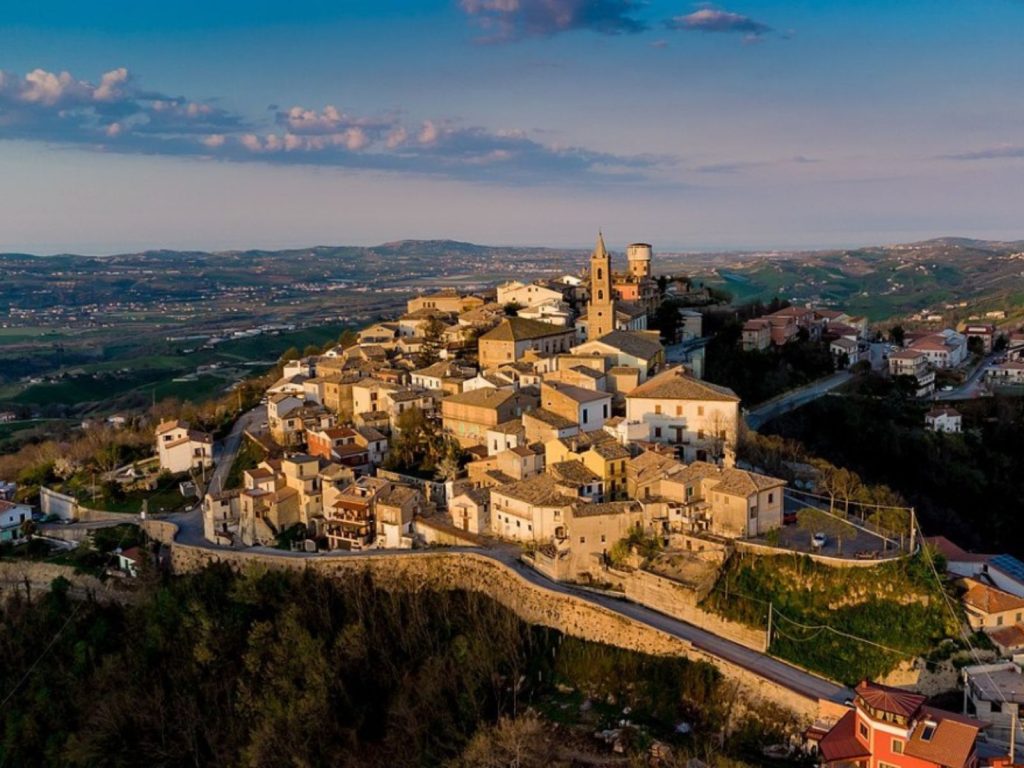
Just over 10 km from our campsite, nestled in the first foothills of the Apennines, lies the beautiful historic town of Atri.
One of the oldest towns in Abruzzo and among the most beautiful historic towns in the region, Atri was already mentioned by Latin authors such as Livy and Pliny, who referred to it as Hadria.
Some historians even suggest that the Adriatic Sea takes its name from this ancient town.
Beyond its ancient origins, Atri has truly stood the test of time, becoming one of the most popular destinations in Abruzzo today.
This charming town of pre-Roman origins, where past and present blend seamlessly, boasts an extraordinary wealth of cultural and architectural treasures.
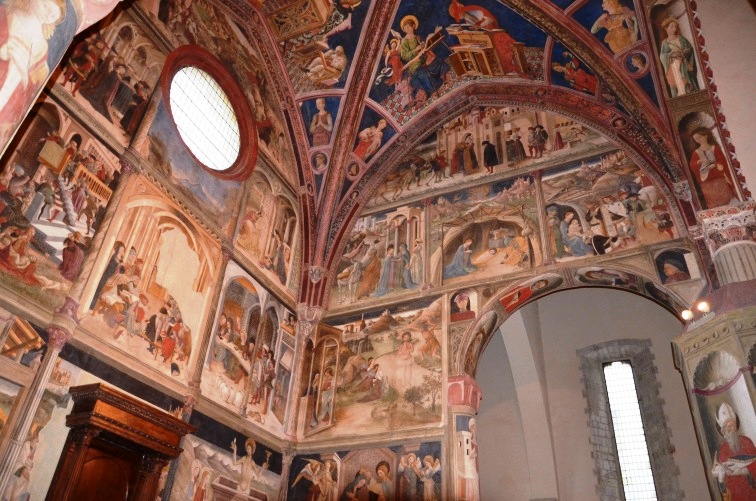
One of its finest examples is the magnificent Basilica of Santa Maria Assunta, dating back to the 13th century and officially recognised as a National Monument since 1899.
With its stunning frescoes, the Basilica is a true masterpiece of art and history and also houses a museum within its complex.
Beyond its religious buildings, Atri boasts magnificent historic palaces, including the impressive Palazzo dei Duchi d’Acquaviva, which also houses the Town Hall, as well as the Ethnographic Museum and the Roman Theatre.
The latter is a remarkable archaeological site, brought back to light following excavations that began in the 1990s.
With a diameter of 70 metres and a capacity of approximately 10,000 spectators, this ancient theatre has certainly stood the test of time, despite being nearly 2,000 years old!
Recognising its extraordinary historical value, the local authorities have sought to bring this ancient treasure back to life by hosting theatrical performances and art exhibitions.
The theatre and its ancient seating area, known as the cavea, also provided a spectacular setting for last year’s Stations of the Cross (Via Crucis).
The Calanchi of Atri
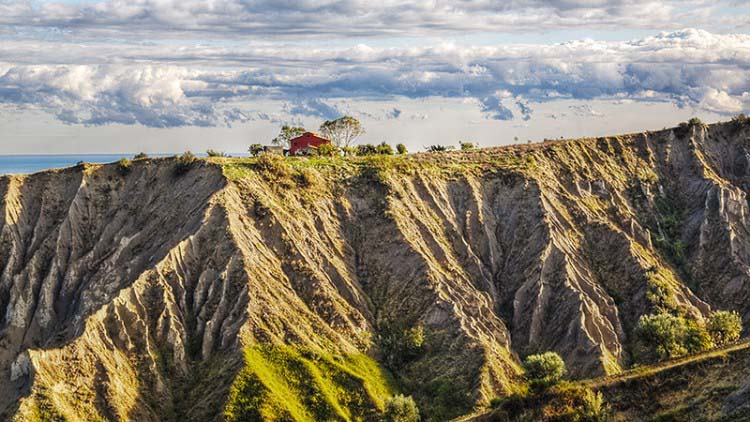
Within the territory of Atri, there is also a protected natural area: the Calanchi Nature Reserve, a WWF oasis offering truly breathtaking scenery.
These striking formations consist of sharp, dramatic clay ridges stretching across more than 380 hectares. Also known as “Dantean ravines”, they create an almost surreal landscape that leaves visitors in awe.
Although they may appear barren and inhospitable, the calanchi are actually home to a rich variety of animal and plant species, including the wild gladiolus and the buzzard, as well as foxes, green lizards and the rare European green toad.
Among the vegetation, alongside broom, tamarisks and capers, one particularly precious plant stands out: Atri liquorice, also known as the “black gold of Abruzzo”.
The Black Gold of Abruzzo
Atri is renowned throughout Italy and beyond as the home of liquorice.
As far back as the Middle Ages, Dominican friars, among the first to spread the use of liquorice root across Europe, were already extracting its precious juice.
Thanks to the clay-rich soil of the Calanchi of Atri, which gives the plant its exceptional quality, Abruzzo has been recognised for centuries as one of Italy’s leading regions for liquorice production.
For visitors exploring Atri, a stop at one of the town’s many traditional liquorice shops is therefore almost a must!
FUN FACTS
Every year, on the night of 8 December, the Feast of the Immaculate Conception, Atri celebrates the traditional Night of the Faugni.
This ancient ceremony, rooted in pagan traditions and later incorporated into Catholic celebrations, sees the people of Atri gather in front of the cathedral to keep a large bonfire burning until dawn.
The festivities include the lighting of bundles of burning reeds, known as faugni, accompanied by dancing and traditional celebrations.
What are you waiting for? Come and explore Atri! Just over 10 km from our campsite – Atri is right around the corner!